A marketplace that knew
it could be more.
Before 2023, Doctoranytime was Greece's leading doctor directory — a well-loved platform connecting patients with over 30,000 healthcare professionals across 5+ countries. Since 2012, the core proposition had stayed the same: search for a doctor, read reviews, book an appointment. Simple, functional, and increasingly limited.
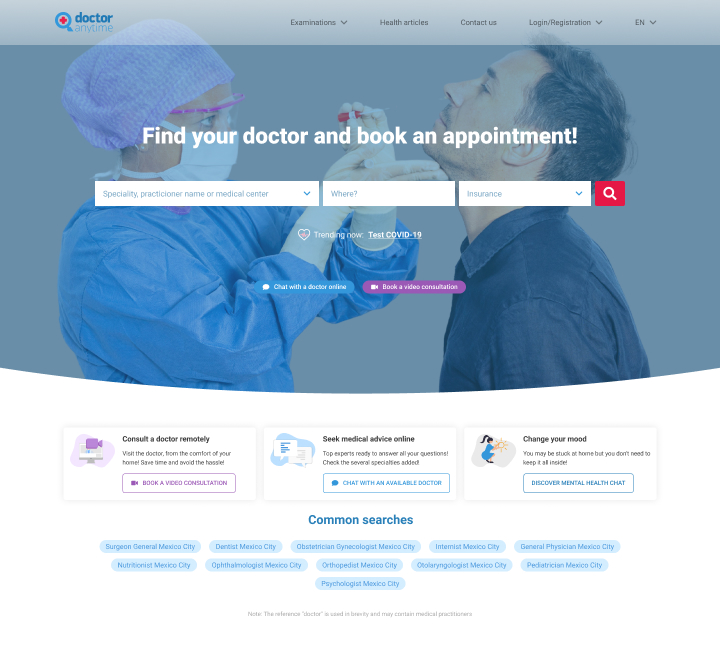
The business model reflected this: revenue came primarily from doctors who paid to be listed. Patients were the audience, not the customer. Every screen, every CTA, every piece of copy reinforced one transactional message: "Find your doctor and book an appointment." And it worked — until the market made clear that booking a slot was never the whole job to be done.
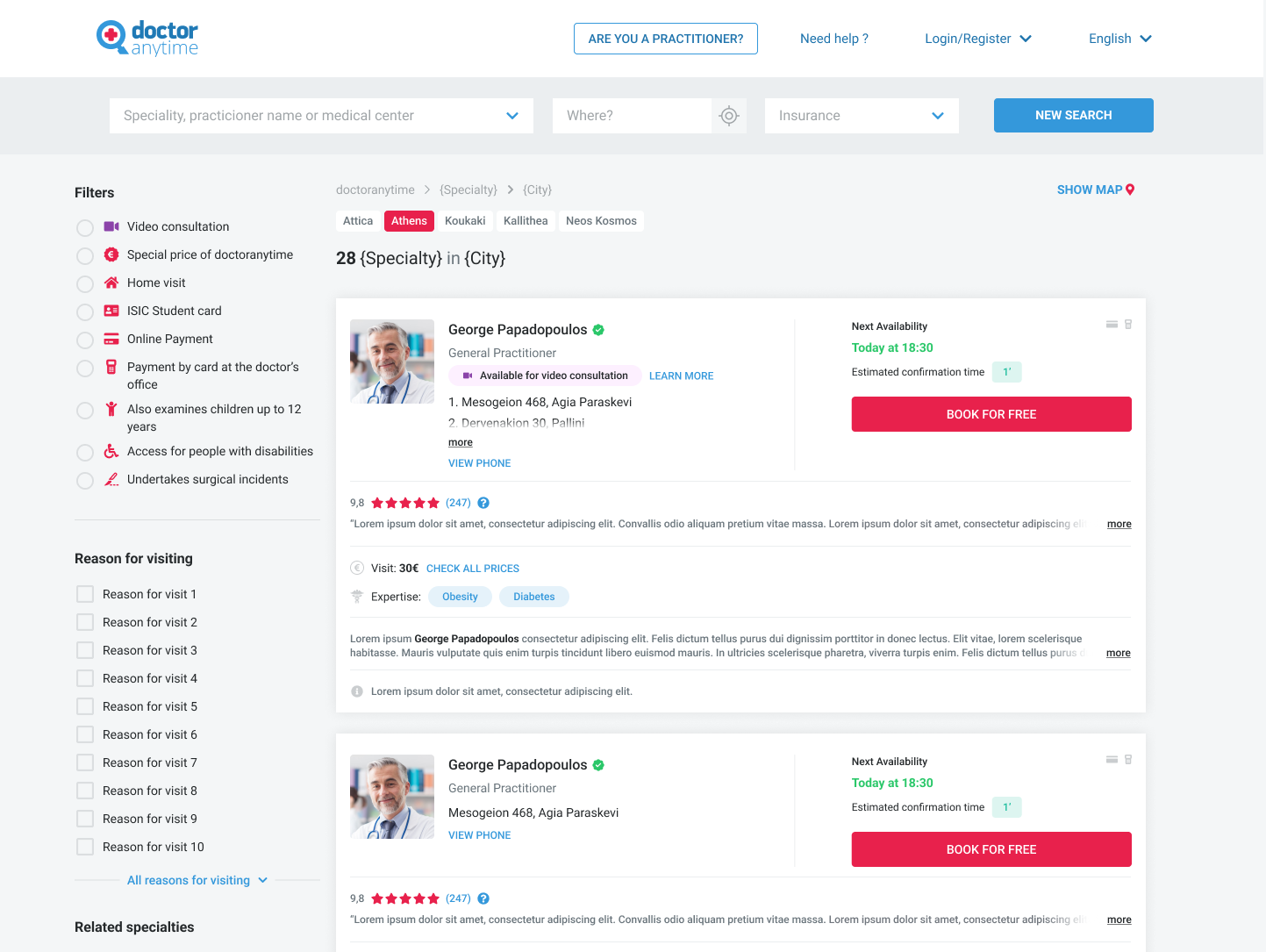
Before — S-Page — Search Results
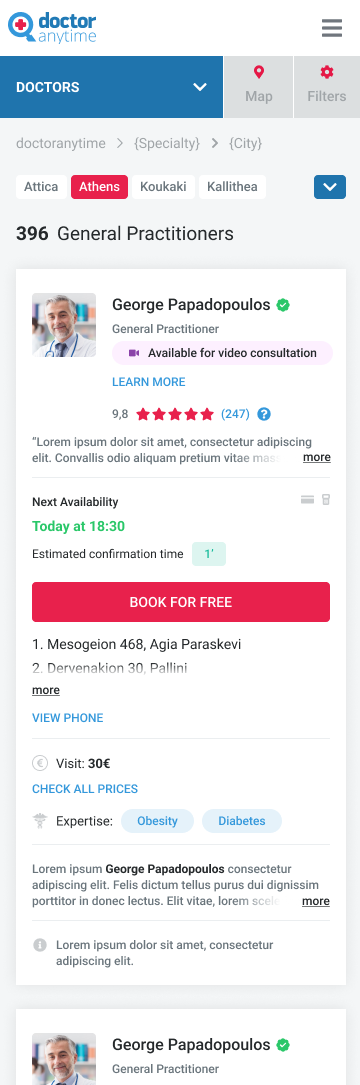 Mobile
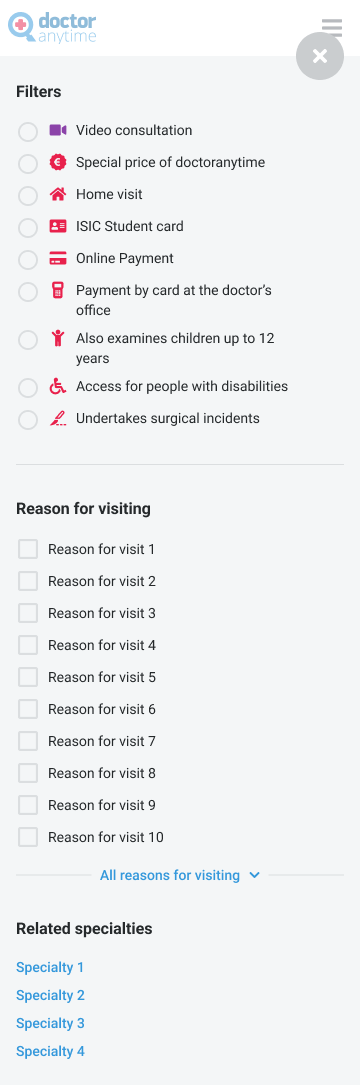 Filters
Before — D-Page — Doctor Profile
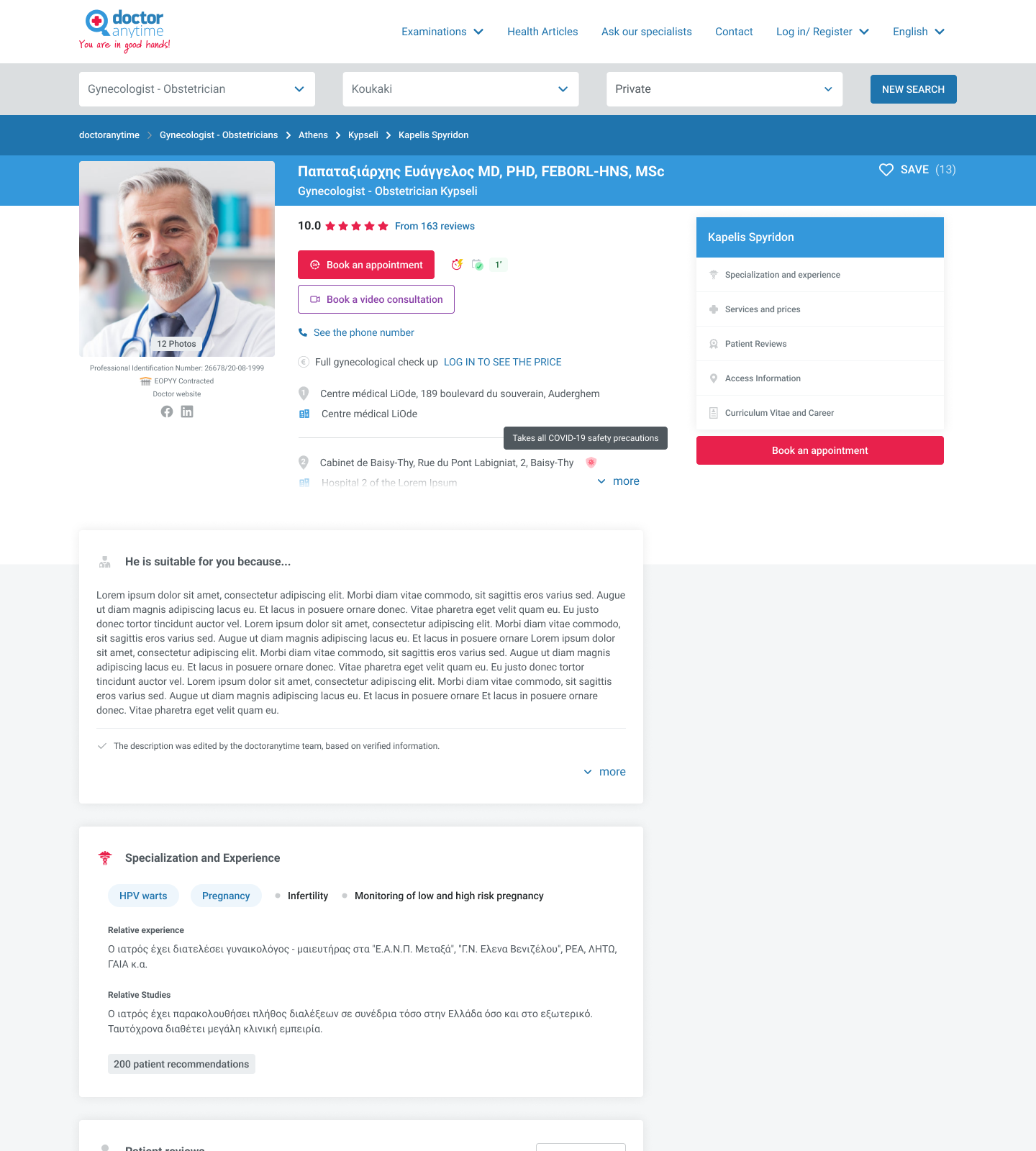
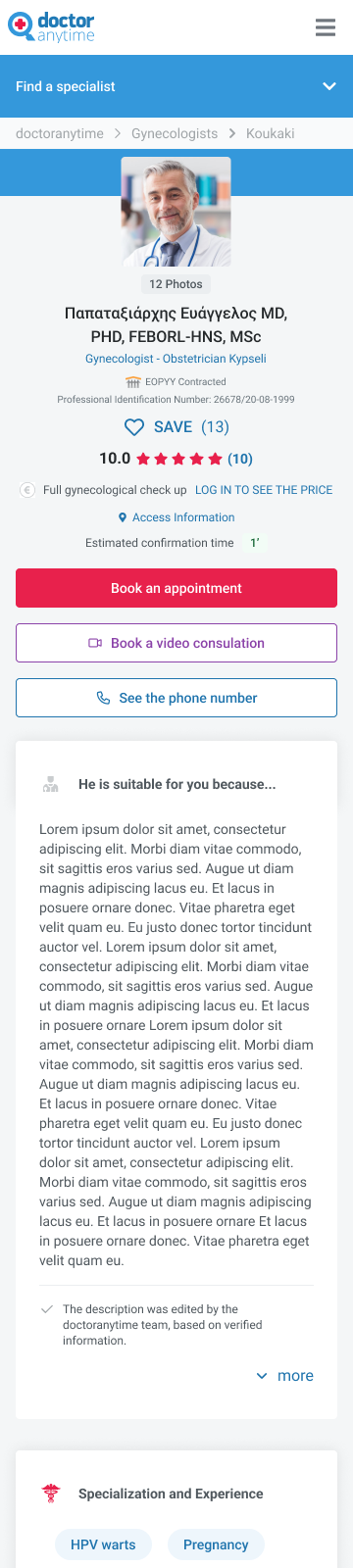 Mobile
The real brief wasn't a new look.
It was a new identity.
When I joined as Global Head of Design, the leadership had already made a decisive call: Doctoranytime would stop being a place to find a doctor and become the platform people turn to for any health need — at any point in their lives. That shift demanded more than a rebrand. It required rethinking the product architecture, the business model, and the relationship with users from scratch.
The new strategy introduced B2C subscription plans, a suite of specialised digital clinics, and a fully restructured product experience — no longer a search tool, but an entry point to a complete health ecosystem. The visual rebrand wasn't the starting point; it was the external expression of an internal transformation already underway.
"Patients don't come to us because they love booking appointments. They come because they need their health taken care of. We had to become a product that understood the difference."
The old positioning
The new positioning
A new product for every new health need.
From B2C subscriptions to specialised digital clinics — six brand-new products, each with its own brand, proposition, and launch. Not updates. Net-new.
An identity that matched
the ambition.
The old Doctoranytime logo — a magnifying glass with a medical cross — said exactly what the product did: help you find a doctor. The new brand needed to say something bigger. Working alongside G Design Studio, a Greek branding agency specialised in digital health, we built a visual identity that felt alive, human, and modern — closer to a health and lifestyle brand than a clinical directory.

Where the previous identity spoke to a power user willing to navigate a dense directory, the new brand was designed to feel familiar to anyone — from a first-time patient in Mexico to a seasoned specialist in Athens. Vibrant illustration, confident typography, and a blue that balanced trustworthiness with energy.
The first translation.
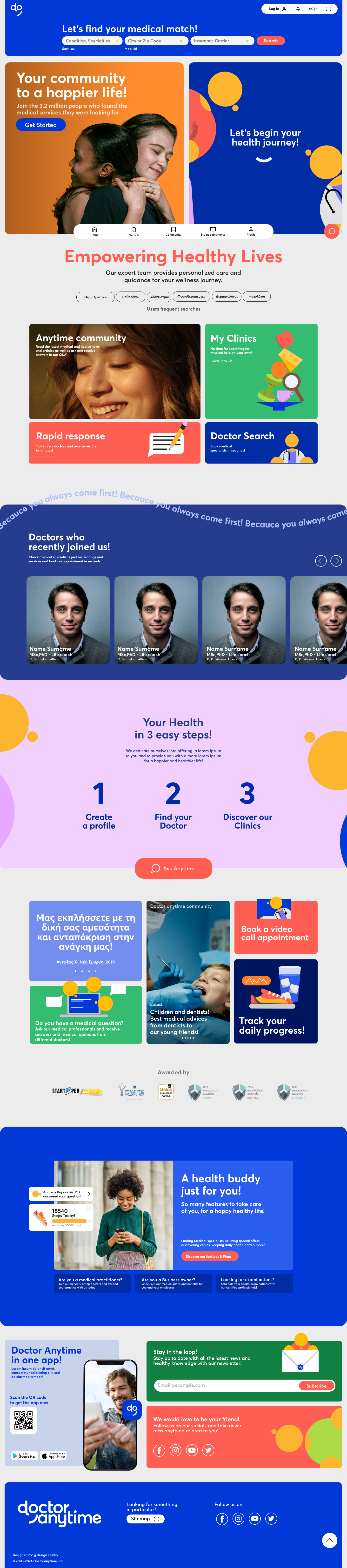
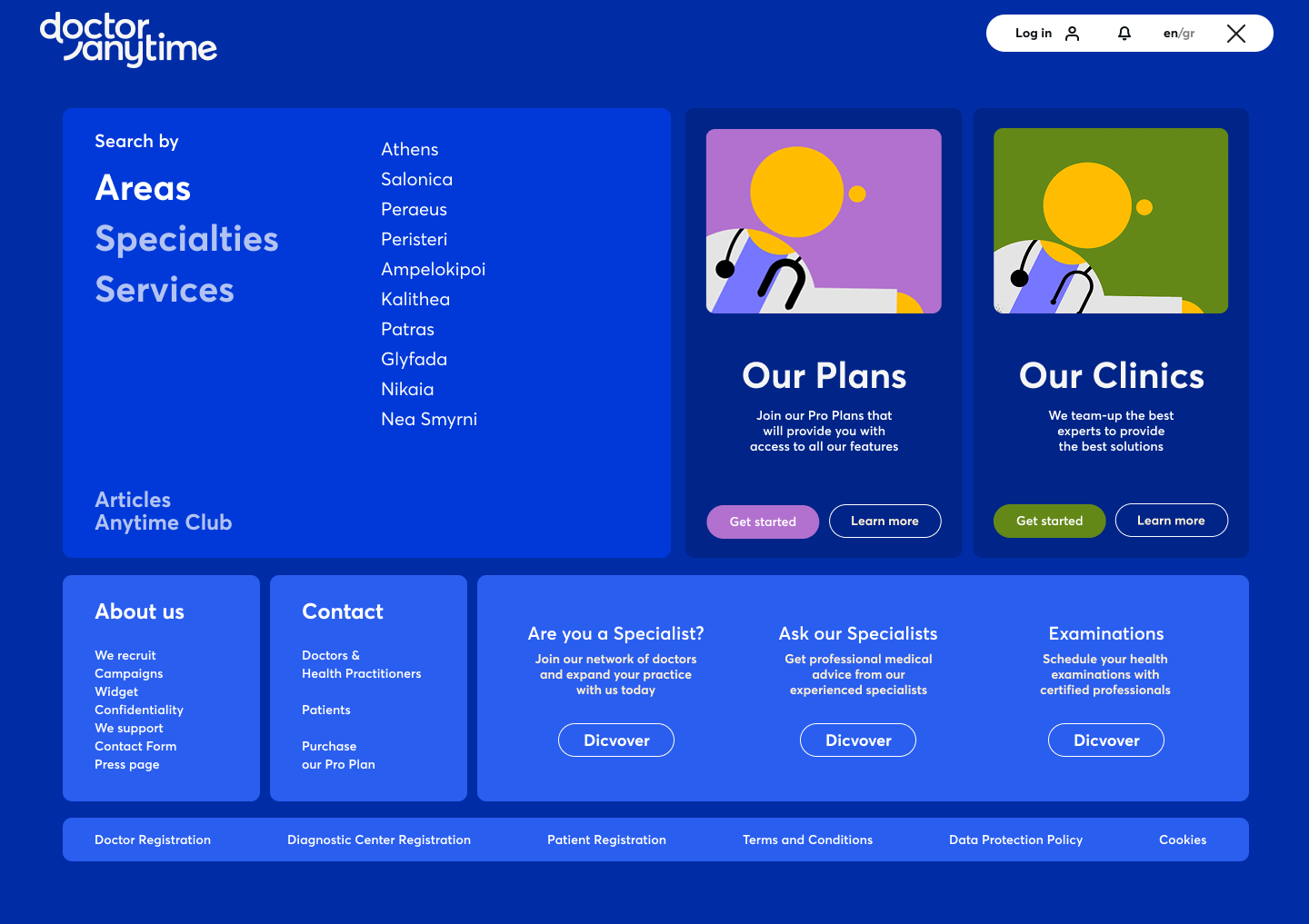
A brand identity is born in style guides and presentations. The real test is what happens when it meets the product — the search flows, the doctor profiles, the navigation architecture that already had millions of users depending on them. V1 wasn't a redesign from scratch. It was a translation: taking every decision made at the brand level and figuring out how it lived inside the actual product, at every level of complexity.
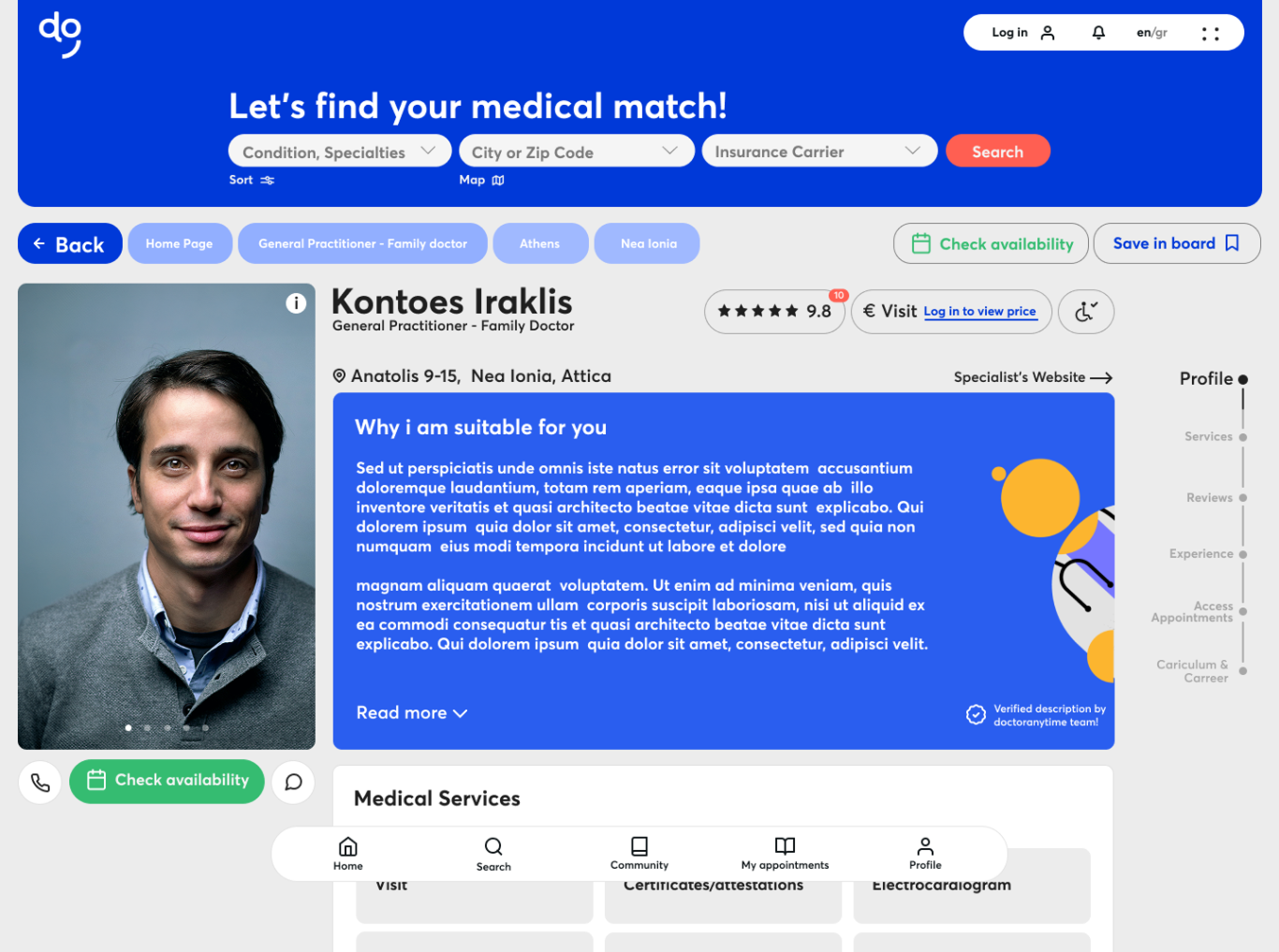
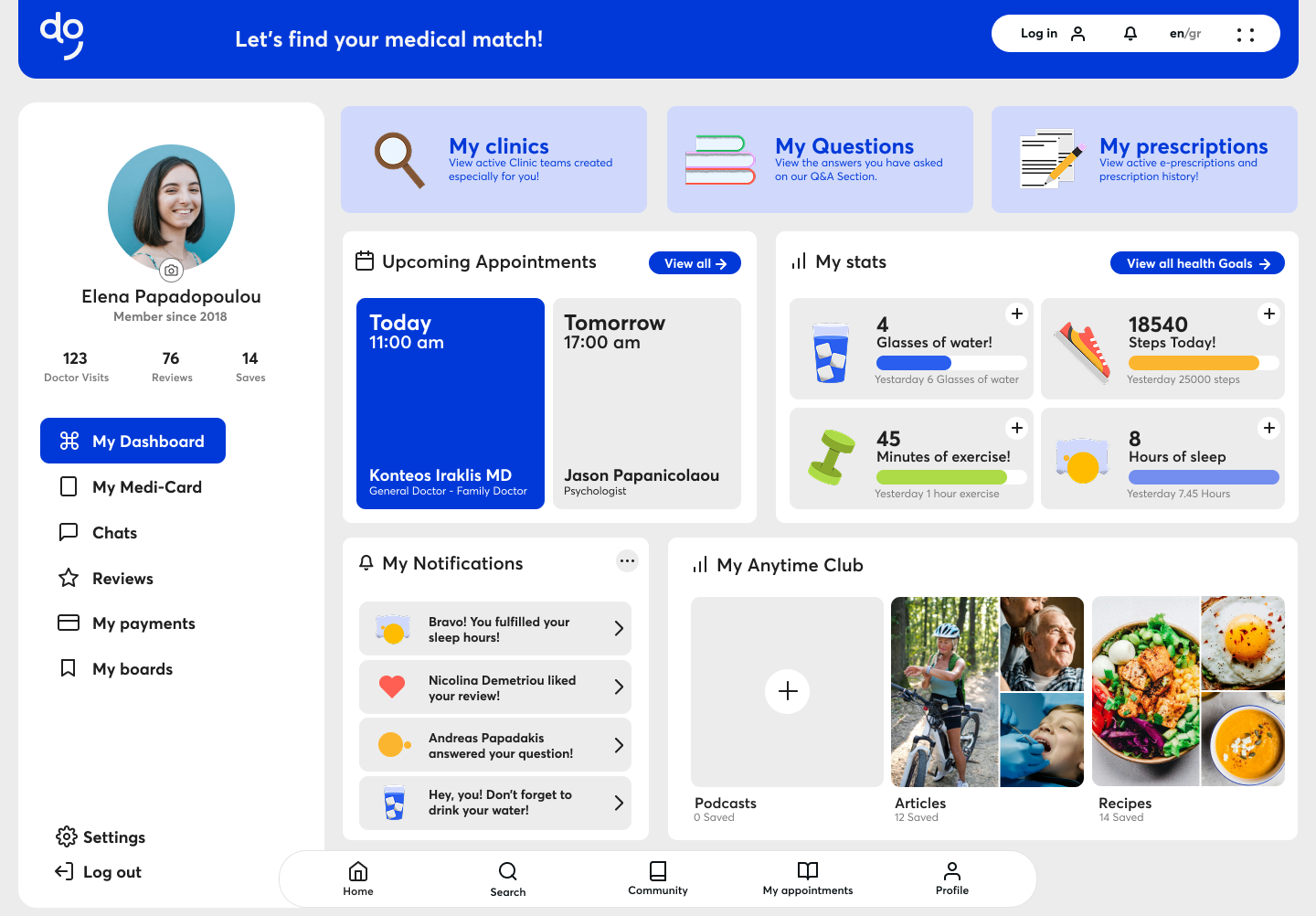
Each screen had to answer the same question: does this visual language hold when it carries real information, real data, real user journeys? Where does the brand need to flex — and where does the product architecture need to change to let it breathe? V1 answered both. It proved the identity could scale from a homepage hero to a dense doctor profile with dozens of services, reviews, and booking flows — and gave us the design system we needed to build six new products on top of it.
V1 — Desktop — Brand meets product for the first time
Six products, one platform,
one health journey.
Where the old Doctoranytime had one product — book a specialist — the new platform launched with a full ecosystem of services designed around different moments in someone's health life. Each product had its own name, visual identity, and proposition. All discoverable from the same homepage, navigation, and app. The new architecture made it possible to serve a patient from their first search all the way through long-term care management.






V1 Mobile — the full ecosystem, accessible from anywhere
 Homepage V1
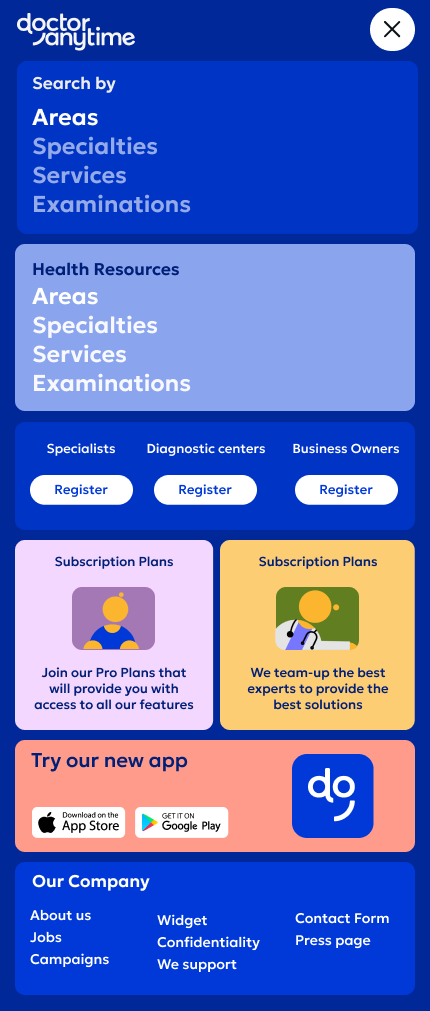 Navigation
 User Dashboard
V1 — Core flows redesigned from scratch
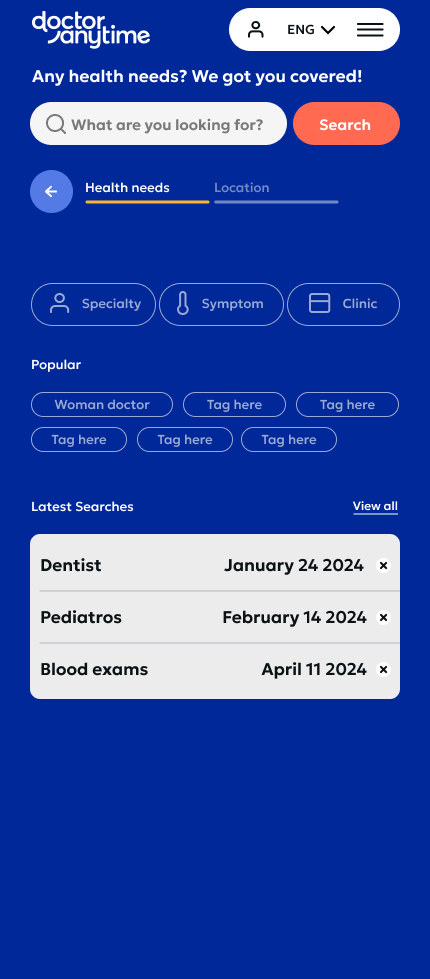 Search — V1
 Results (S-Page)
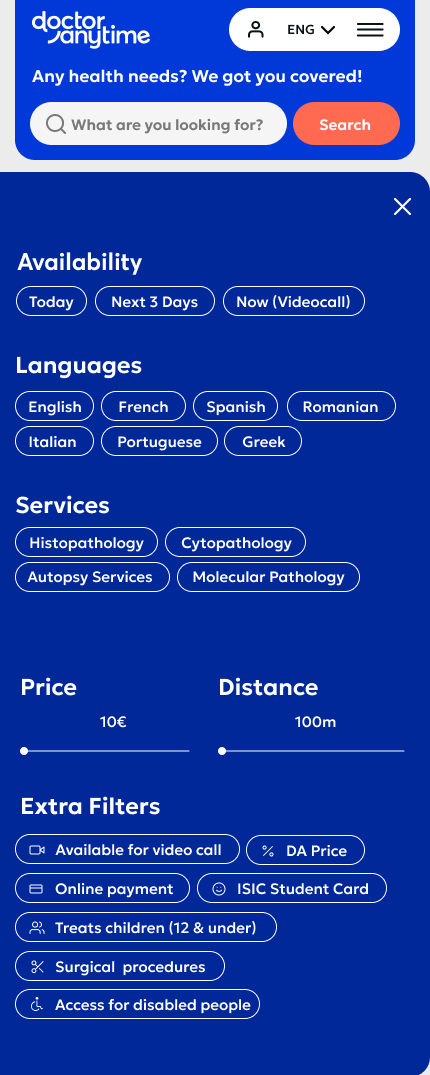 Filters
 Doctor Profile
When 80% of your patients live on their phone, the phone is the product.
From the moment the new Doctoranytime went live, one number shaped every design decision: more than 80% of B2C traffic came from mobile. This wasn't a surprise — but it was a forcing function. Mobile-first wasn't a design trend we were following; it was the reality of our users' lives across Greece, Belgium, and Mexico.
Every component, every flow, every interaction had to earn its place on a 390px screen first. Desktop was an extension — mobile was the truth. This care for mobile wasn't just in design: it went all the way through testing, validation, and how we prioritised what went live first.
V2 Final — The product as shipped
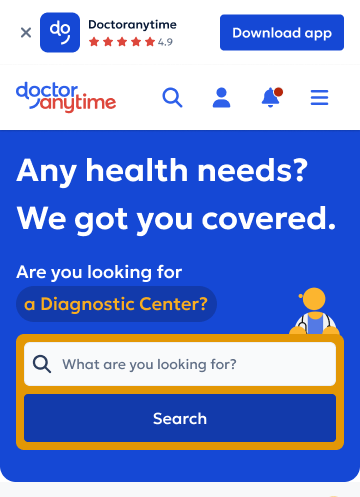
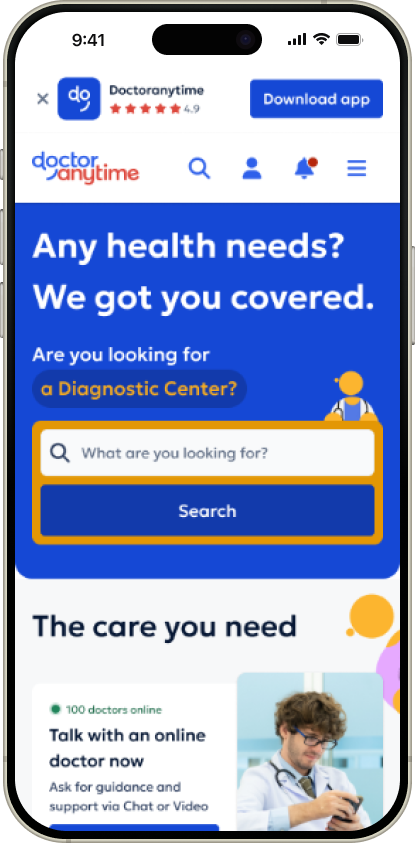 Hero — Any health needs
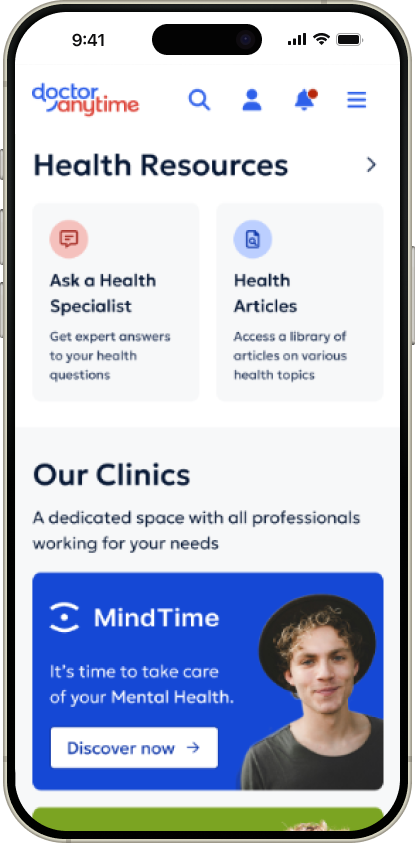 Health Resources — Clinics
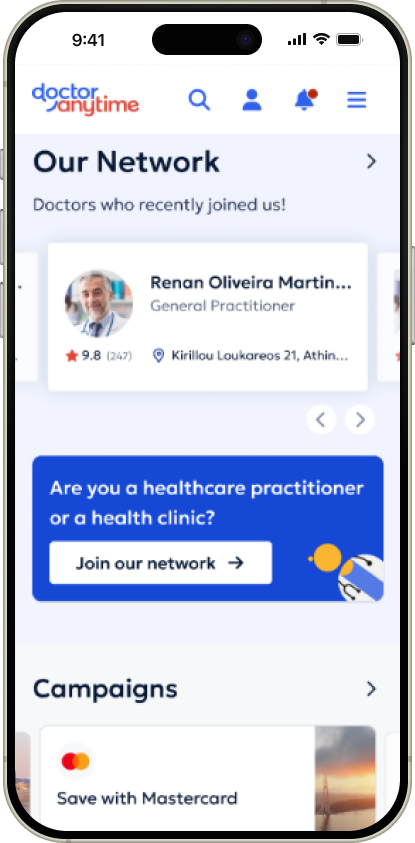 Network — Campaigns
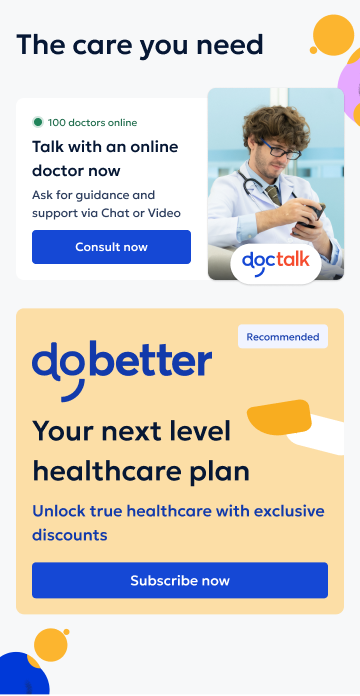
"V1 established the new design language across every core flow. V2 refined what we learned from real users testing it in the wild — less decoration, sharper hierarchy, faster to what matters."
V2 — Final — Refined, shipped, live in production
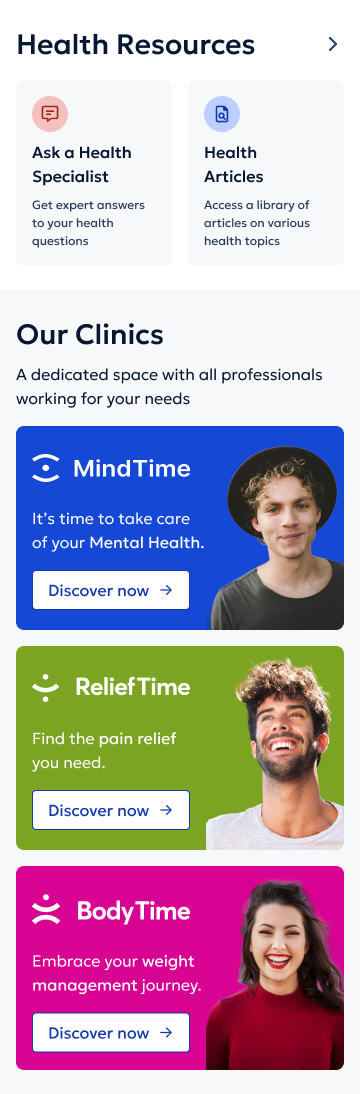
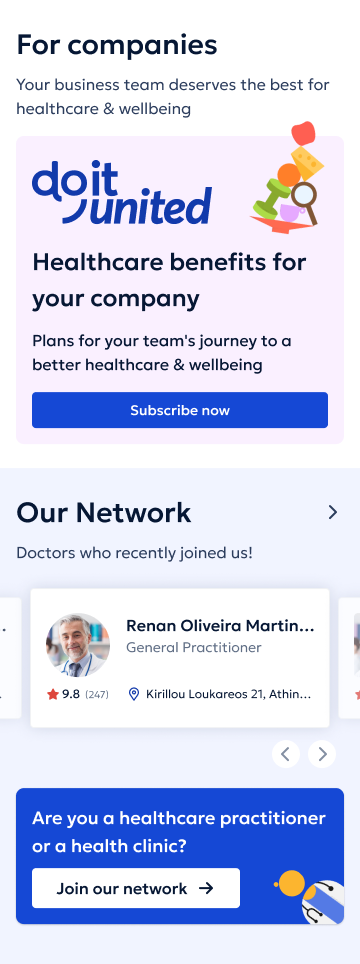
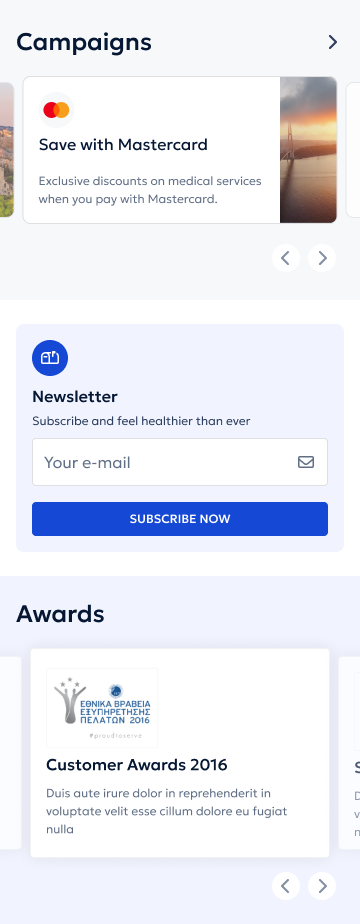
V2 — Search flow — redesigned for health intent, not category
1. New search flow
2. Based on health need
3. Specify your appointment
4. Search for a location
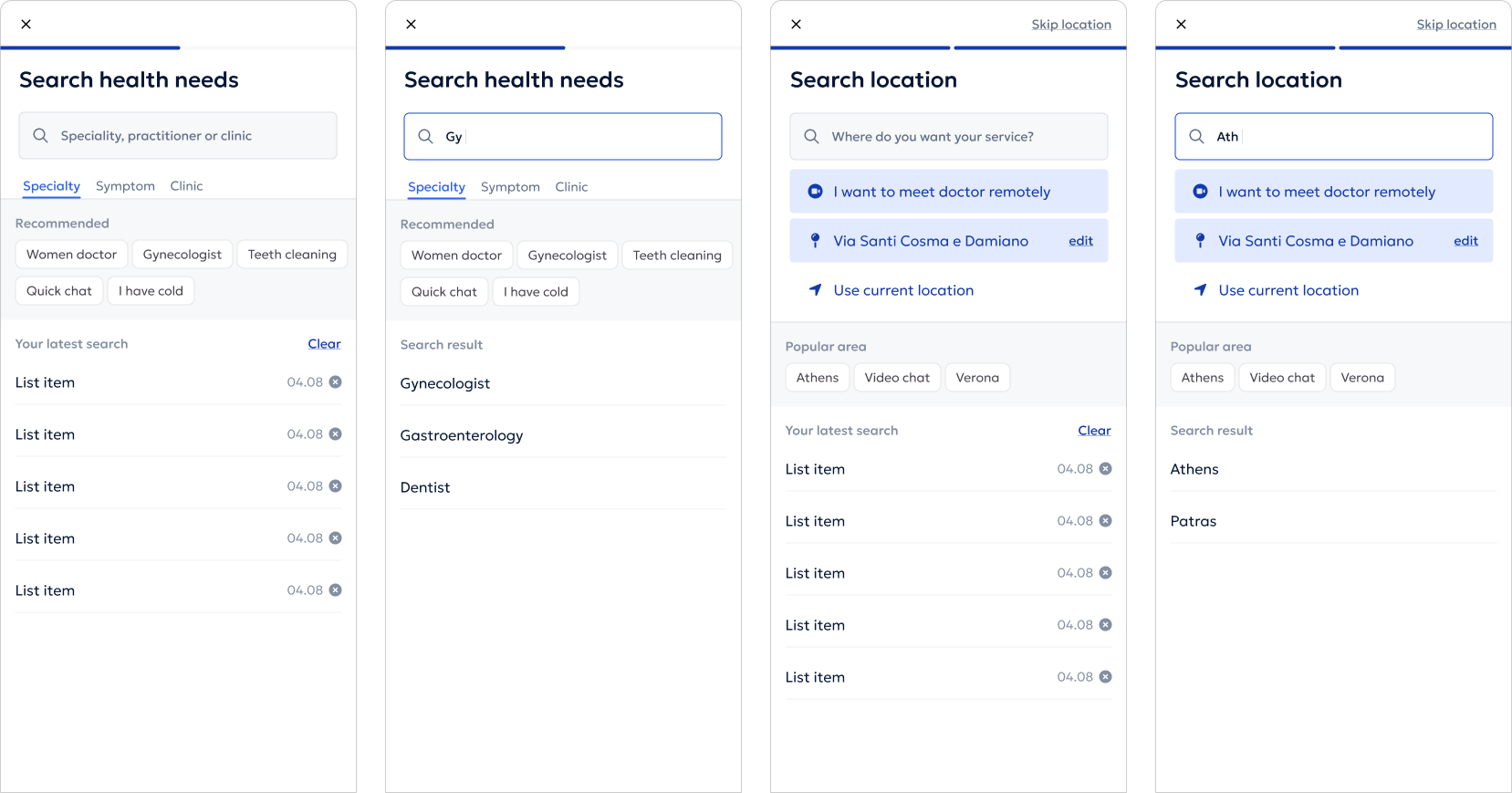
Health need → location context → filtered specialist list → doctor profile with services, availability and booking — the full search journey in four steps.

Seven months.
Seven markets.
A platform that finally matched its ambition.
Everything — the repositioning strategy, brand identity, product ecosystem design, V1 build, user research and testing across multiple markets, V2 refinement, and multi-market production launch — happened in under seven months. Not because we cut corners, but because we built a design practice that could move at the speed the business demanded without sacrificing rigour.
"The measure of a rebrand isn't how it looks on launch day. It's whether the business is healthier six months later. Ours was."
What this demanded — and what it gave back.
Leading design across a remote, distributed team spanning Greece, Belgium, Mexico, and LATAM taught me that alignment is a design problem in itself. When your collaborators are in different time zones, different healthcare cultures, and different stages of the same product rollout, you can't rely on proximity to keep things coherent. You have to build shared language, shared references, and shared ways of making decisions — and you have to build them deliberately, before you need them. The design system wasn't just a component library. It was the infrastructure that made distributed ownership possible without fragmentation.
Managing stakeholders across functions — product, engineering, marketing, commercial — while simultaneously holding the design direction for a full rebrand meant that the hardest conversations weren't about craft. They were about priority, pace, and the courage to say "not yet" when the business was moving at maximum speed. Learning when to push and when to protect — and how to do both without losing trust — is something no process can teach you. You earn it in the room.
Repositioning an established product while launching six net-new ones in parallel is a different challenge than building greenfield. Every new product had to feel like it belonged to the same ecosystem — same brand, same design language, same sense of quality — while being differentiated enough to stand on its own. The constraint was the creative brief. It forced rigour: every component had to earn its place in the system, not just in the screen. The ones that survived are still live.
The most lasting lesson was about brand validation. A new identity doesn't live or die on launch day — it lives or dies in the thousand decisions that come after: how you adapt it under pressure, how you test it against real users in markets you don't fully understand yet, how you iterate without losing the thread. Building a feedback loop into the brand process — treating identity like a product, not a deliverable — changed how I think about what "done" means. It never is. The best brands grow in proportion to what they keep learning.