A century-old energy company, six business units, and no single place to ask for help.
CPFL Energia is one of Brazil's largest electric energy groups — serving millions of customers across distribution, generation, and commercialisation. Internally, the company had been running on a fragmented patchwork of legacy systems and informal processes. Need IT support? Find the right person and ask directly. Need HR to process a benefit? Send an email and hope it reaches the right inbox. Want to know the status of something you requested two weeks ago? There was no way to check.
The operational backbone of a group this size — HR, Finance, Infrastructure, People management — was running on goodwill, institutional memory, and a CRM platform (Dynamics) that had grown far beyond its original purpose. Requests were duplicated, lost, and untraceable. Employees had no single place to go. The internal services team had no visibility into what was happening across the organisation.
"It wasn't a technology problem. It was a process problem dressed as one. Before we could design anything, we had to understand how work actually moved — or didn't move — through this organisation."
visibility
Internal first. Prove product thinking works.
Then scale.
The mandate from Weme's engagement was intentional: start with the company's own internal operations before touching any external-facing product. In a traditional industry, leadership doesn't buy the value of product thinking in the abstract. They need to see it work — on something real, measurable, and close to home. An internal service portal was the perfect vehicle.
This approach meant that every decision made on Portal CSC — from the information architecture to the rollout strategy — had to demonstrate product rigour. OKRs over deliverables. User research before assumptions. Phased releases instead of big-bang launches. If this worked, we'd have the credibility and the model to bring the same methodology to CPFL's external products and innovation agenda.
"The product was the argument. Every metric we improved on Portal CSC was a data point that product-led design works — not just in fintechs and startups, but in a 100-year-old energy company."
The old way
The new way
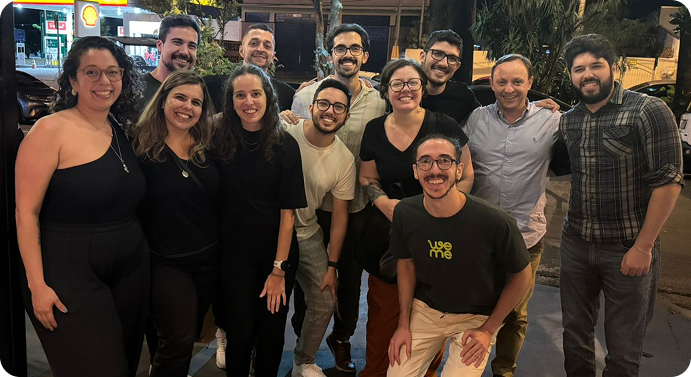
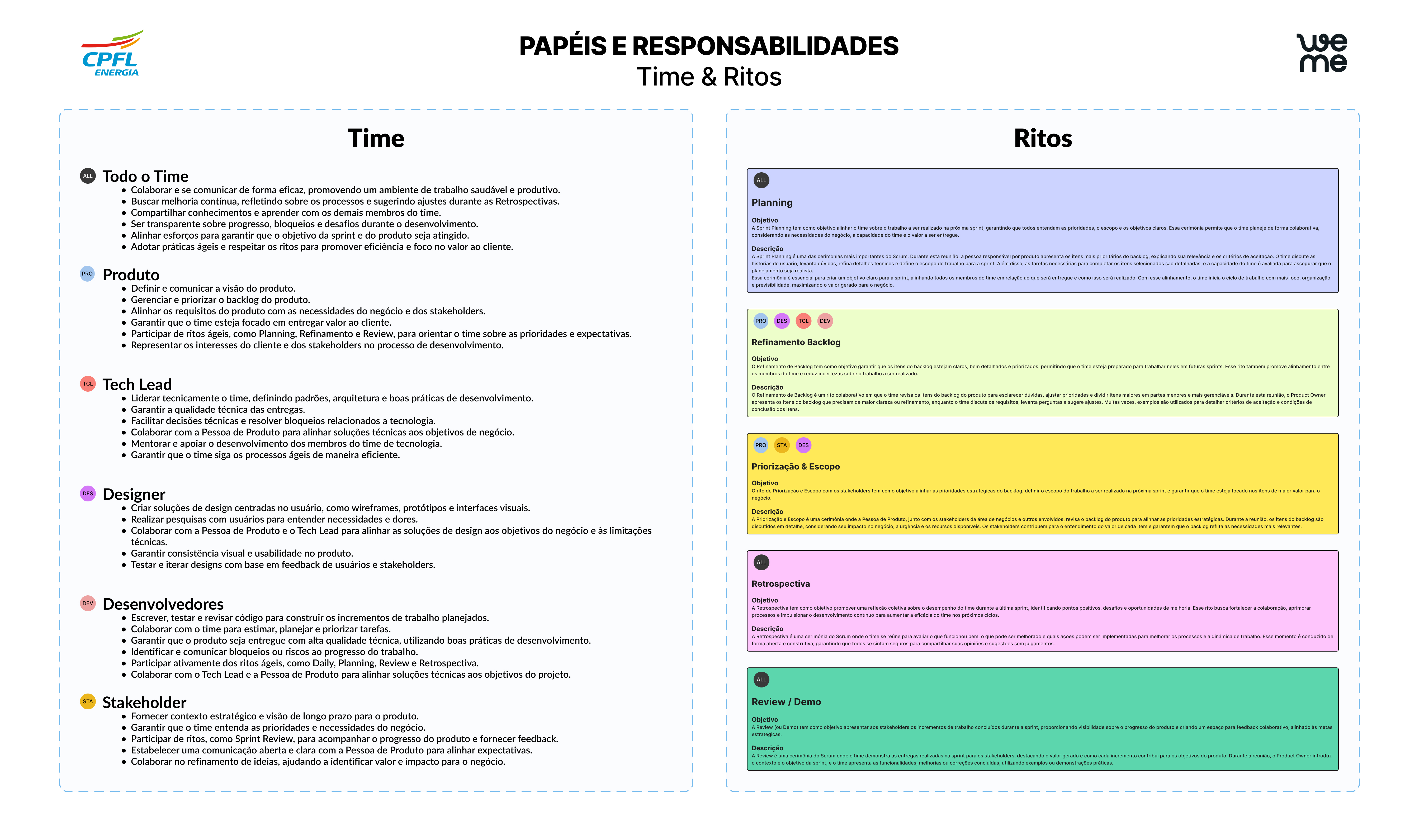
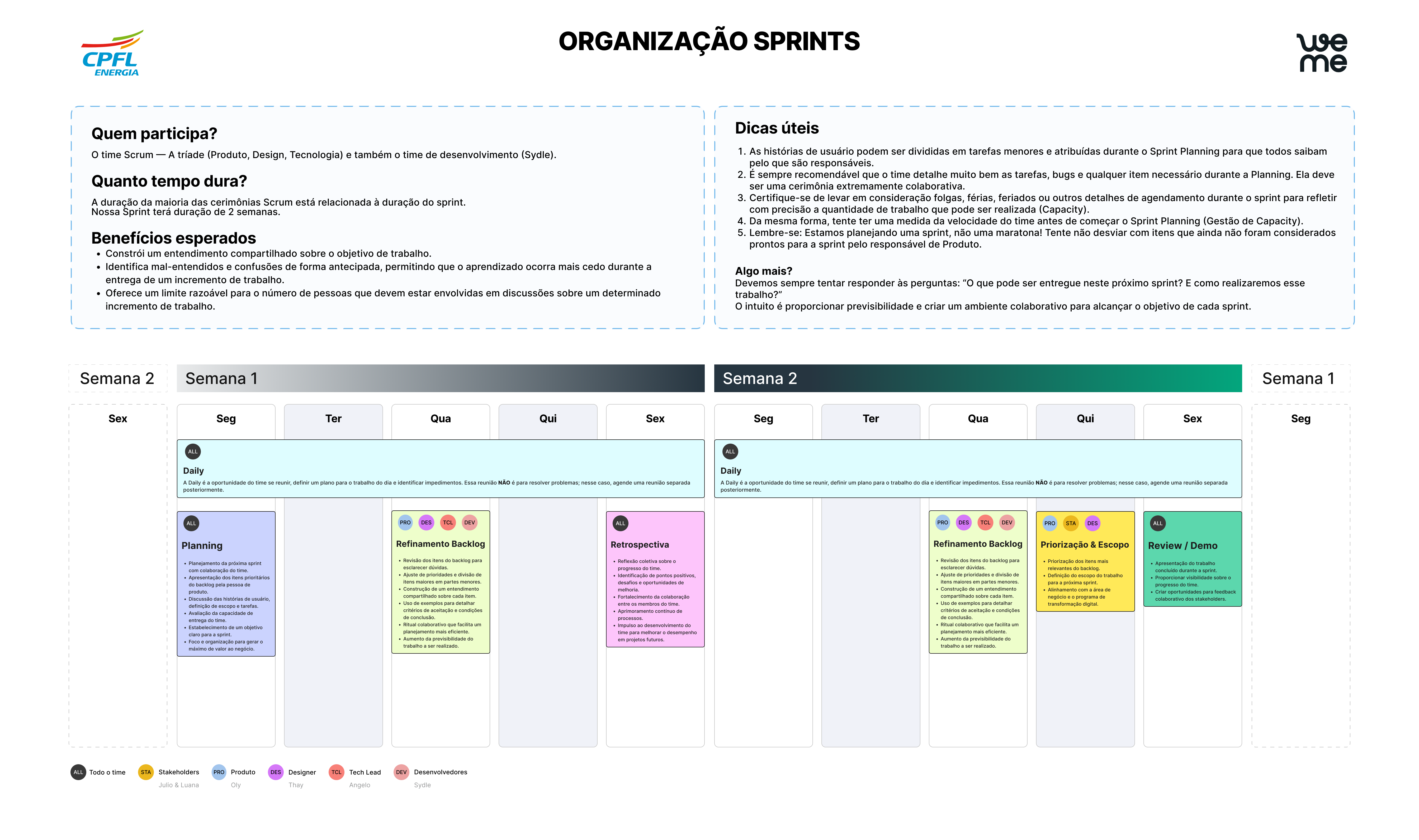
Team — Roles, responsibilities & sprint cadence
One portal. Every request.
Every area.
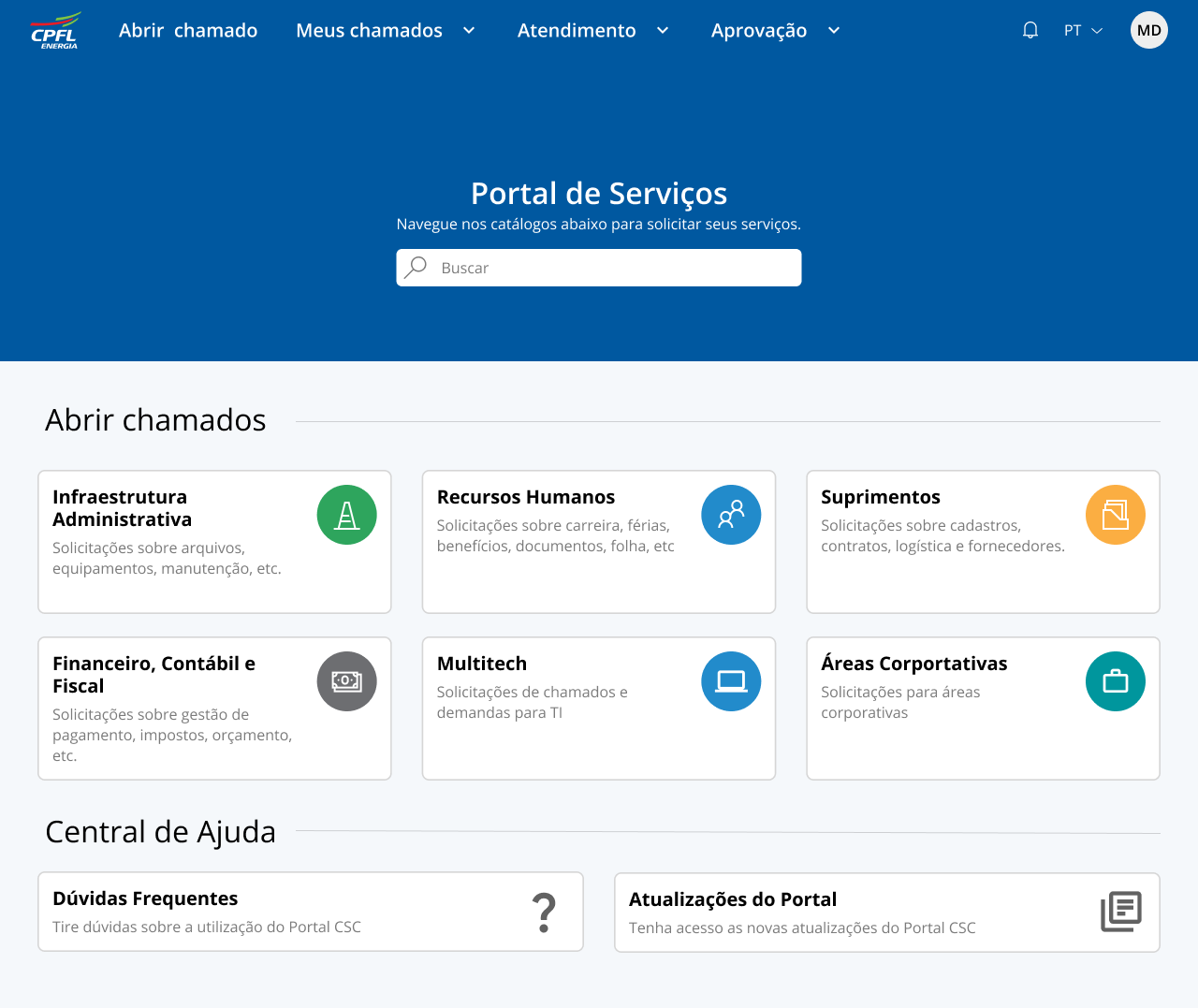
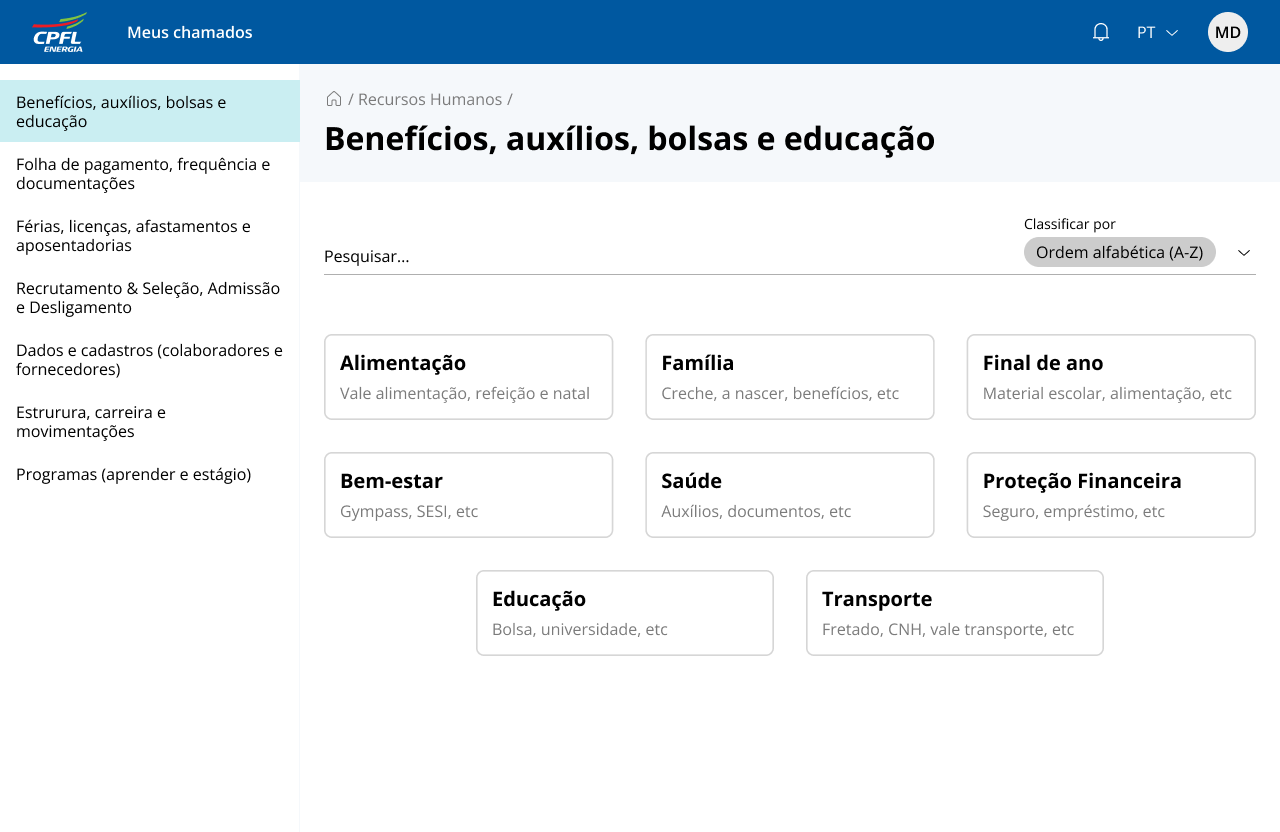
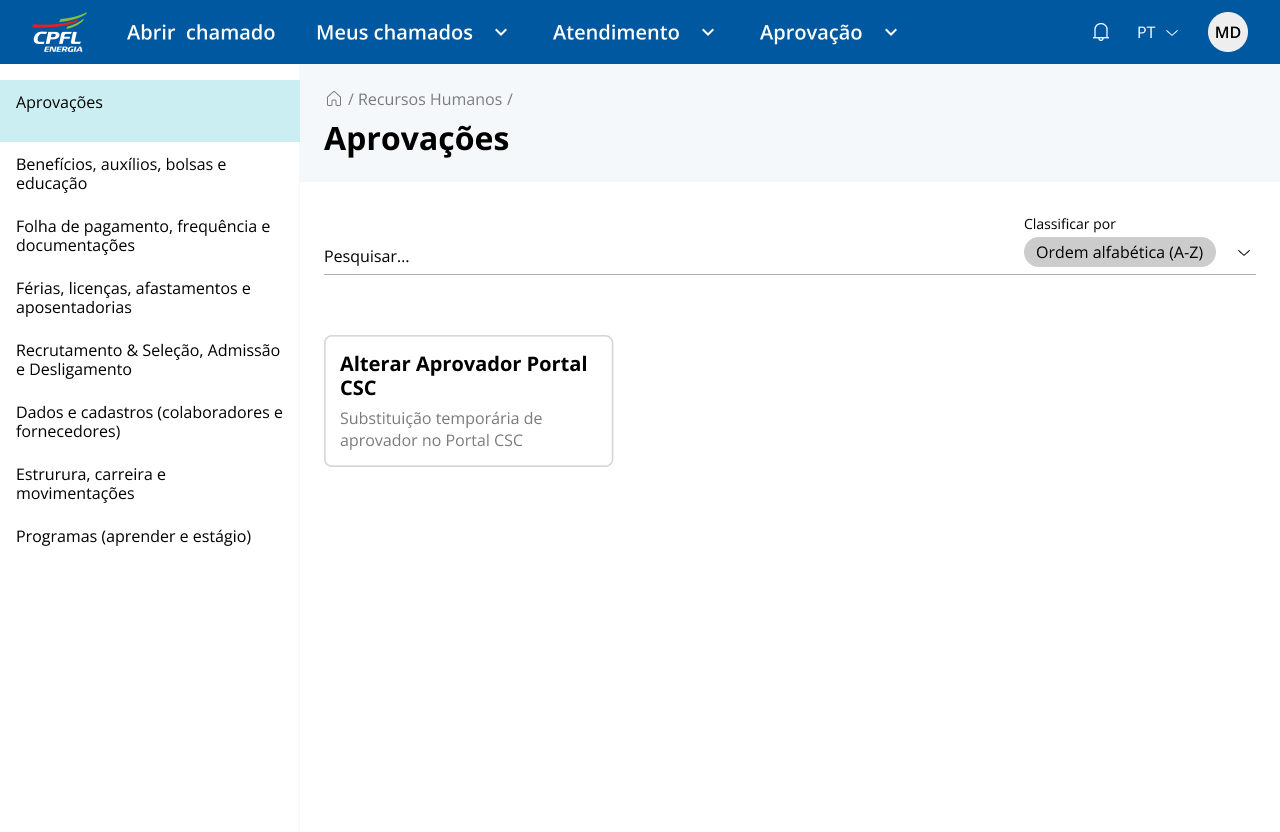
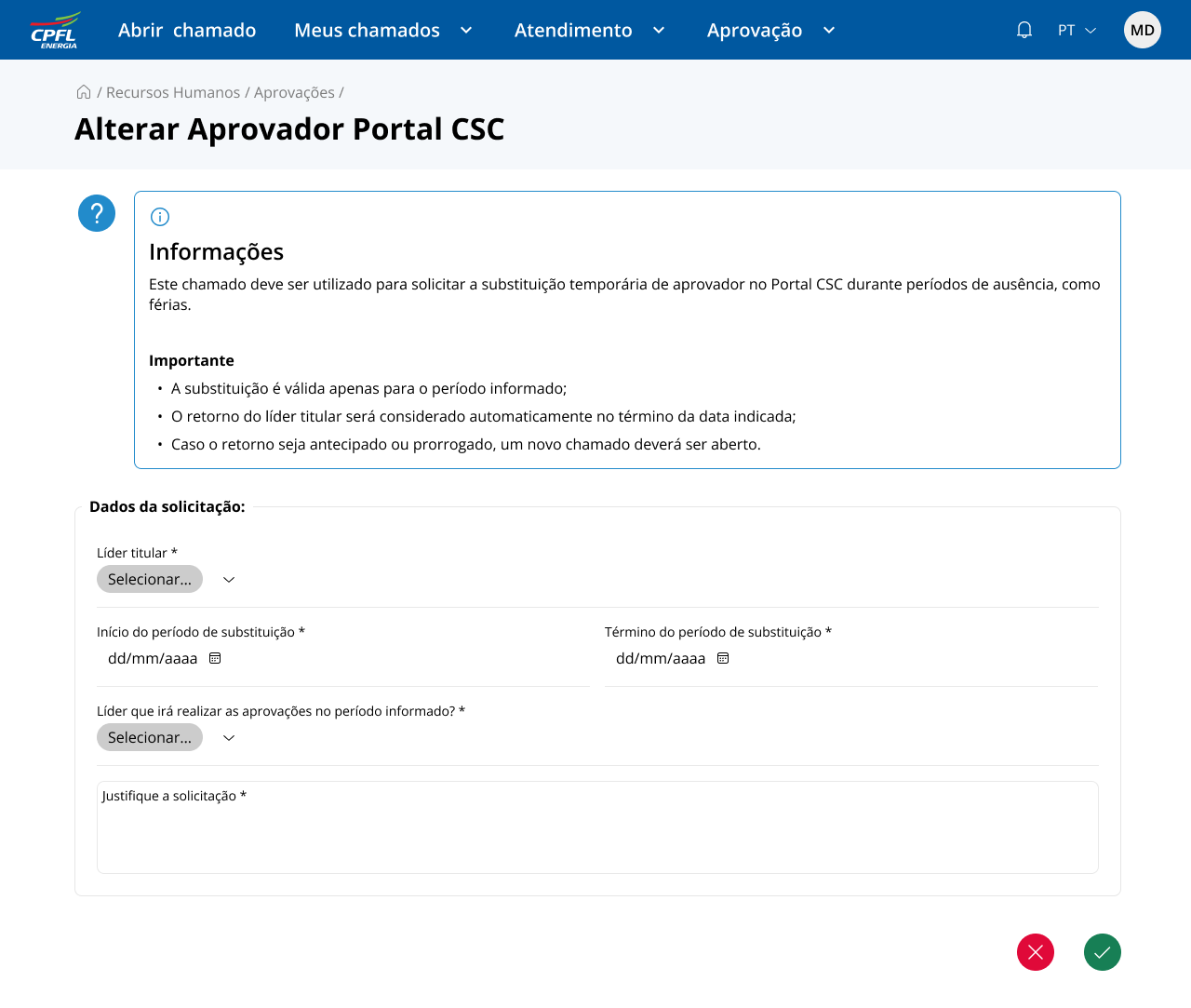
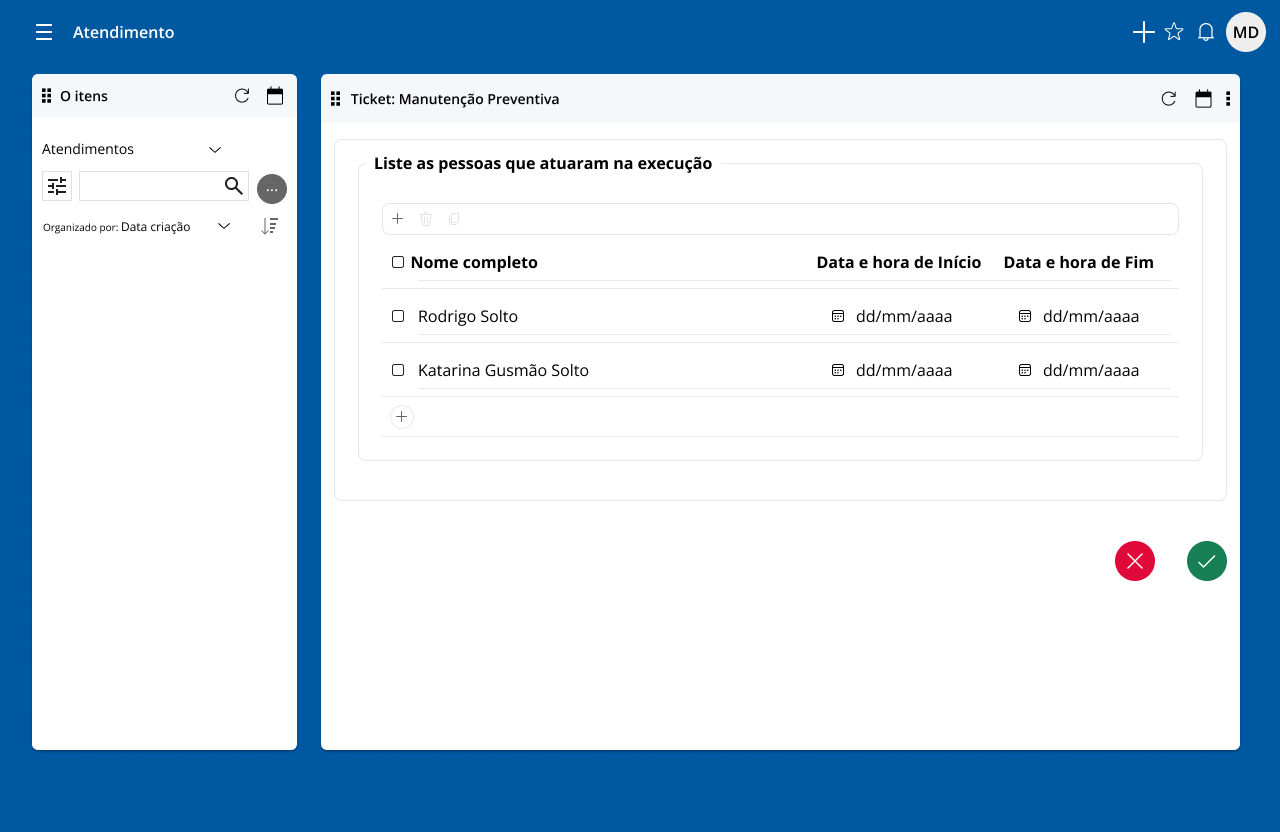
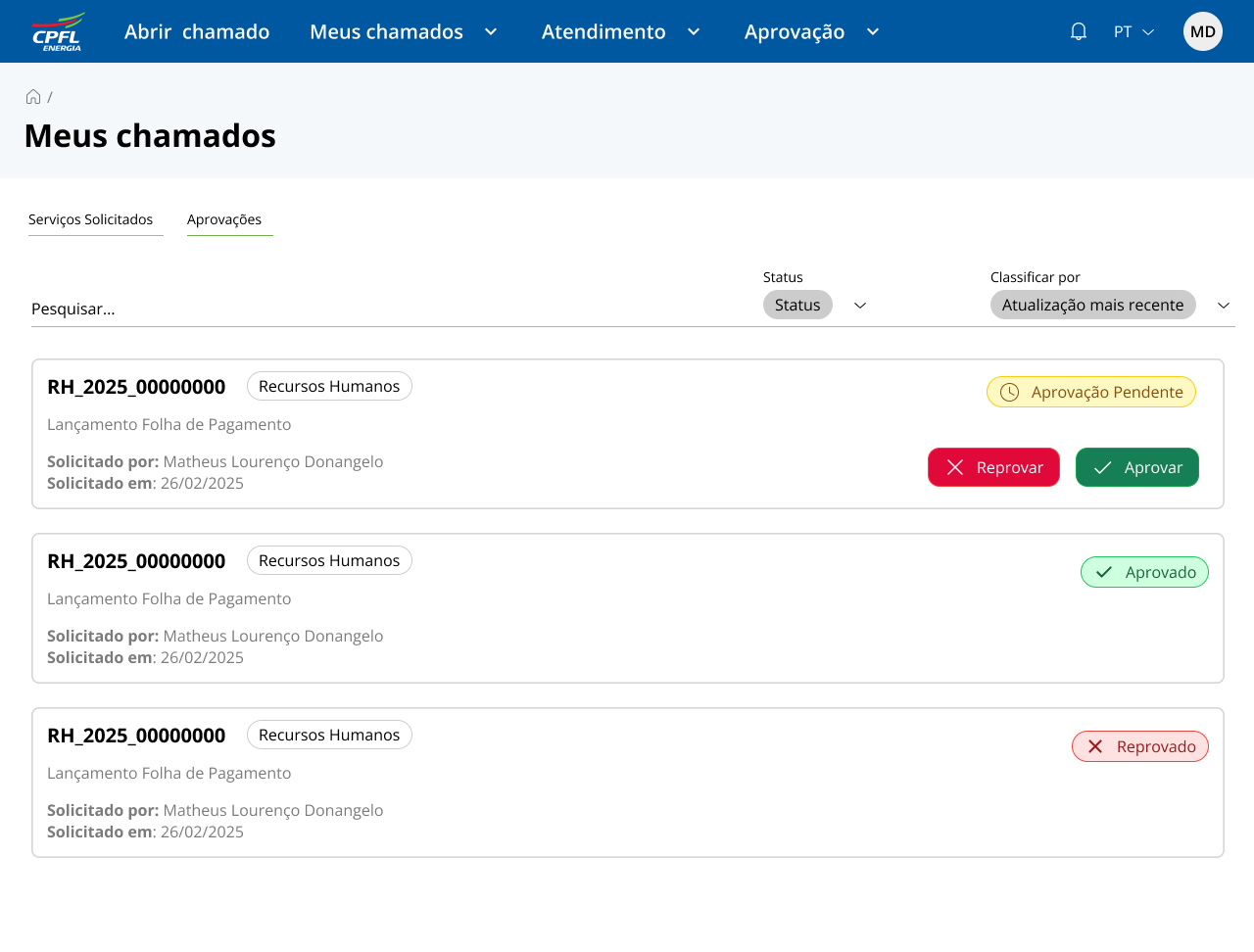
Portal CSC — Centro de Serviços Compartilhados — replaced the old Dynamics CRM as the single platform for all internal service requests at CPFL. Built on Sydle's BPMS, the portal unified six business areas under one experience: a structured catalog of services, a ticket management system, approval flows, productivity dashboards, and a satisfaction feedback loop. Every employee, from any unit, could open a request, track it in real time, and rate the service they received.
Portal CSC — Key screens
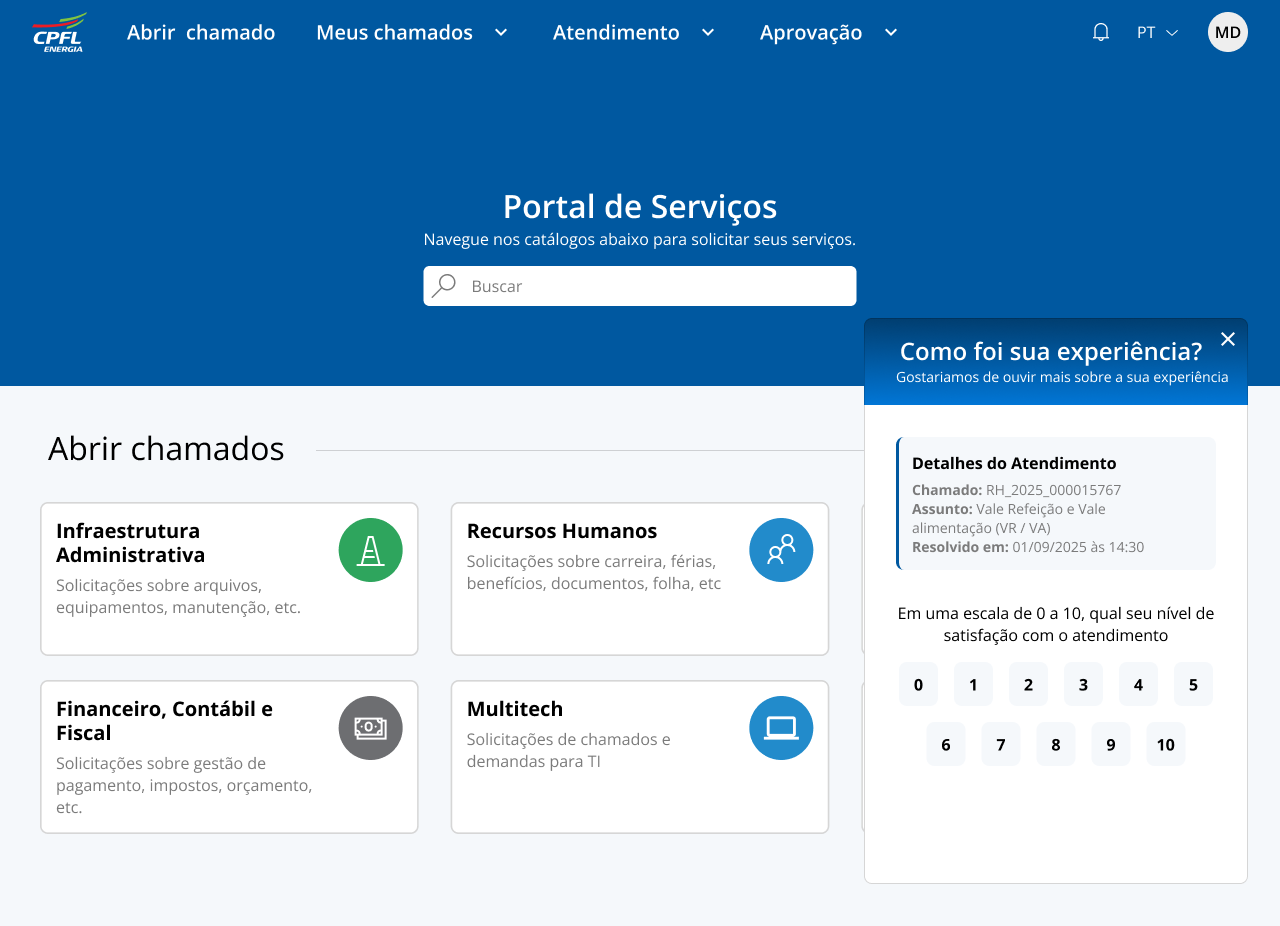
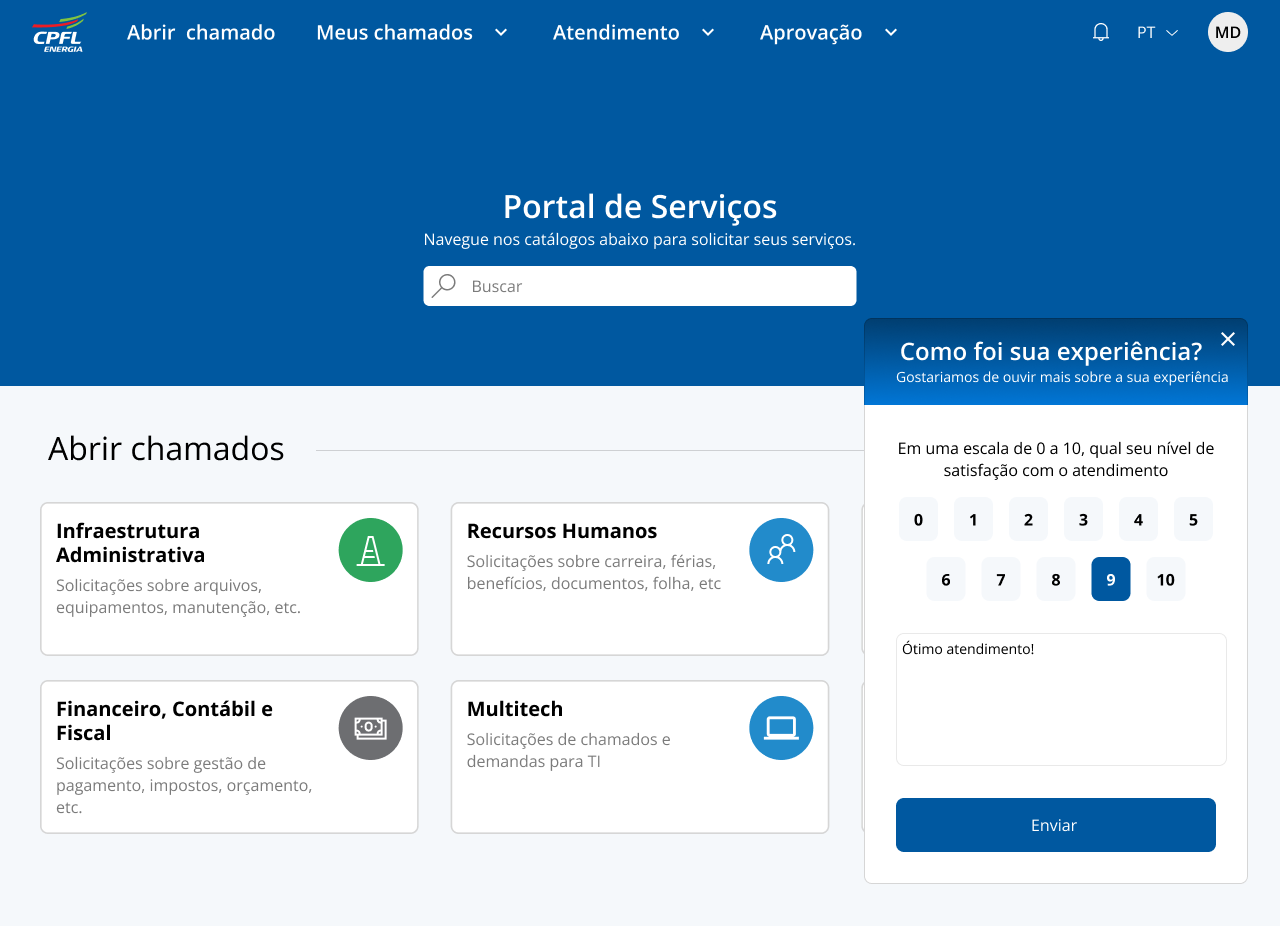
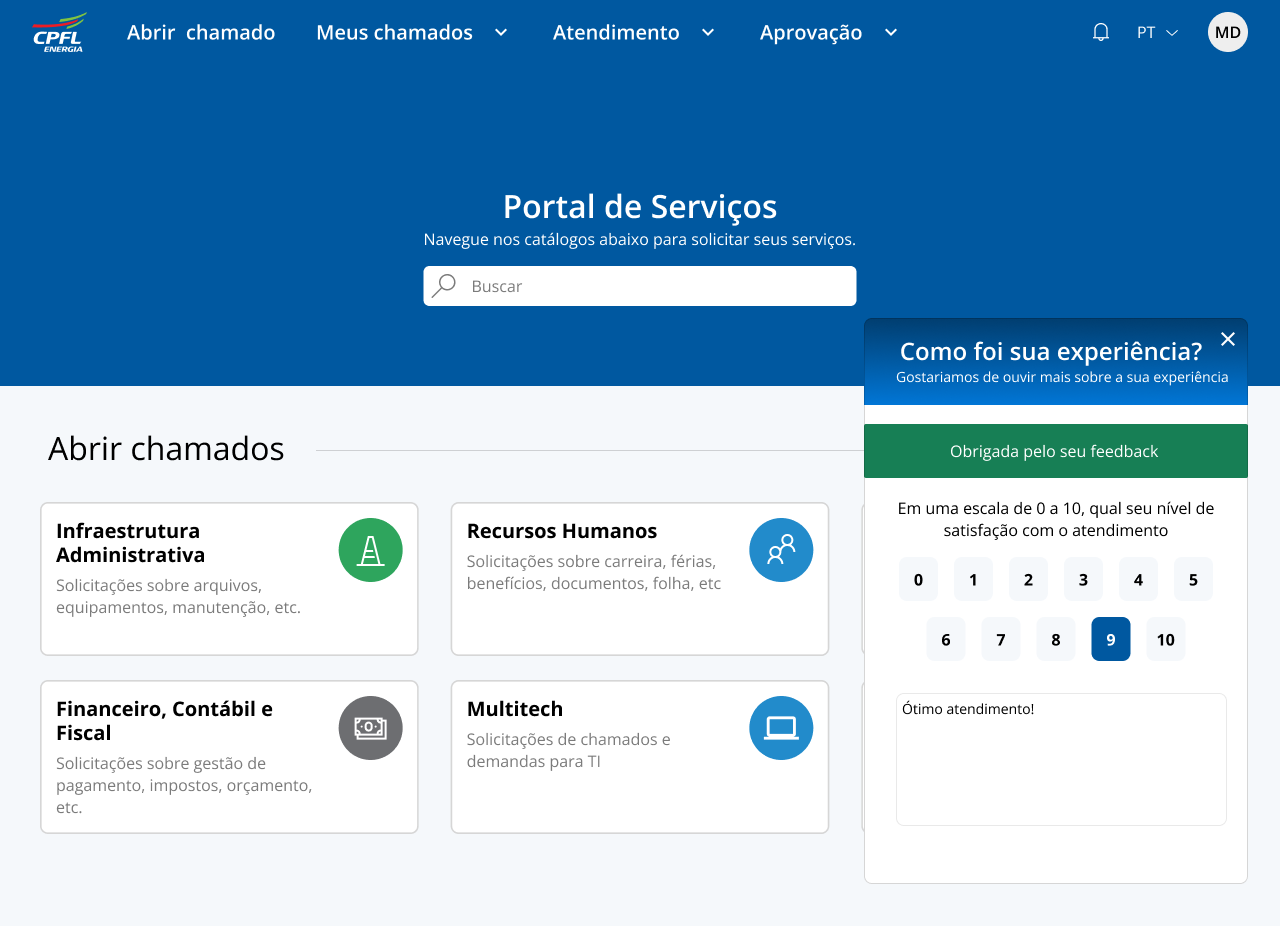
Portal CSC — Measuring experience
Internal tools deserve the same feedback loops as consumer products.
One of the most overlooked aspects of internal product design is that employees rarely have a voice. They use what they're given — and their frustration is invisible to the business. We built a structured experience-rating system directly into Portal CSC: every resolved ticket triggers a satisfaction flow, and managers get aggregated feedback by area, team, and service category. For a company at the start of its digital transformation journey, this data was foundational — not just for iterating on the portal, but for proving to leadership that product quality is measurable, even internally.
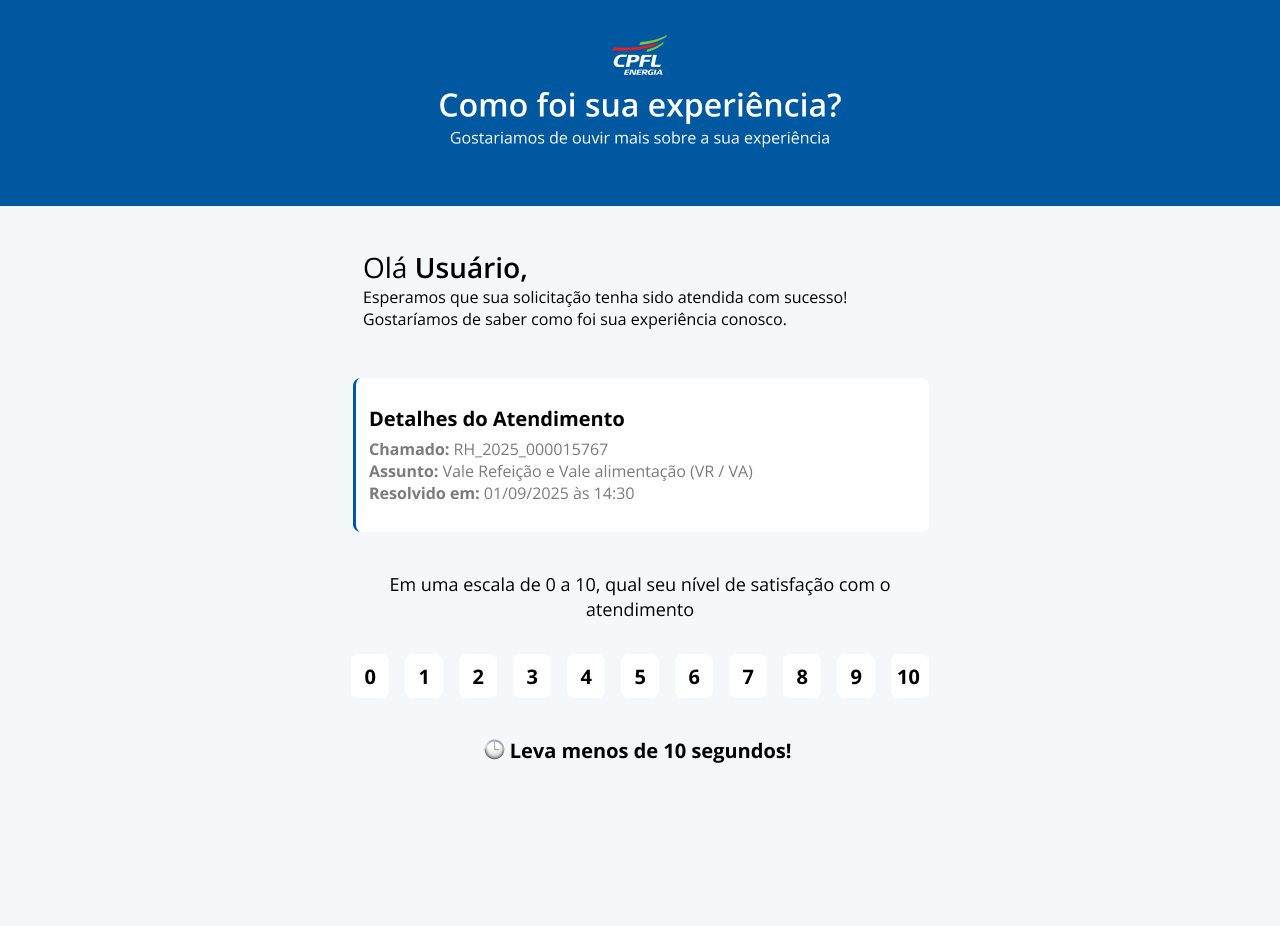
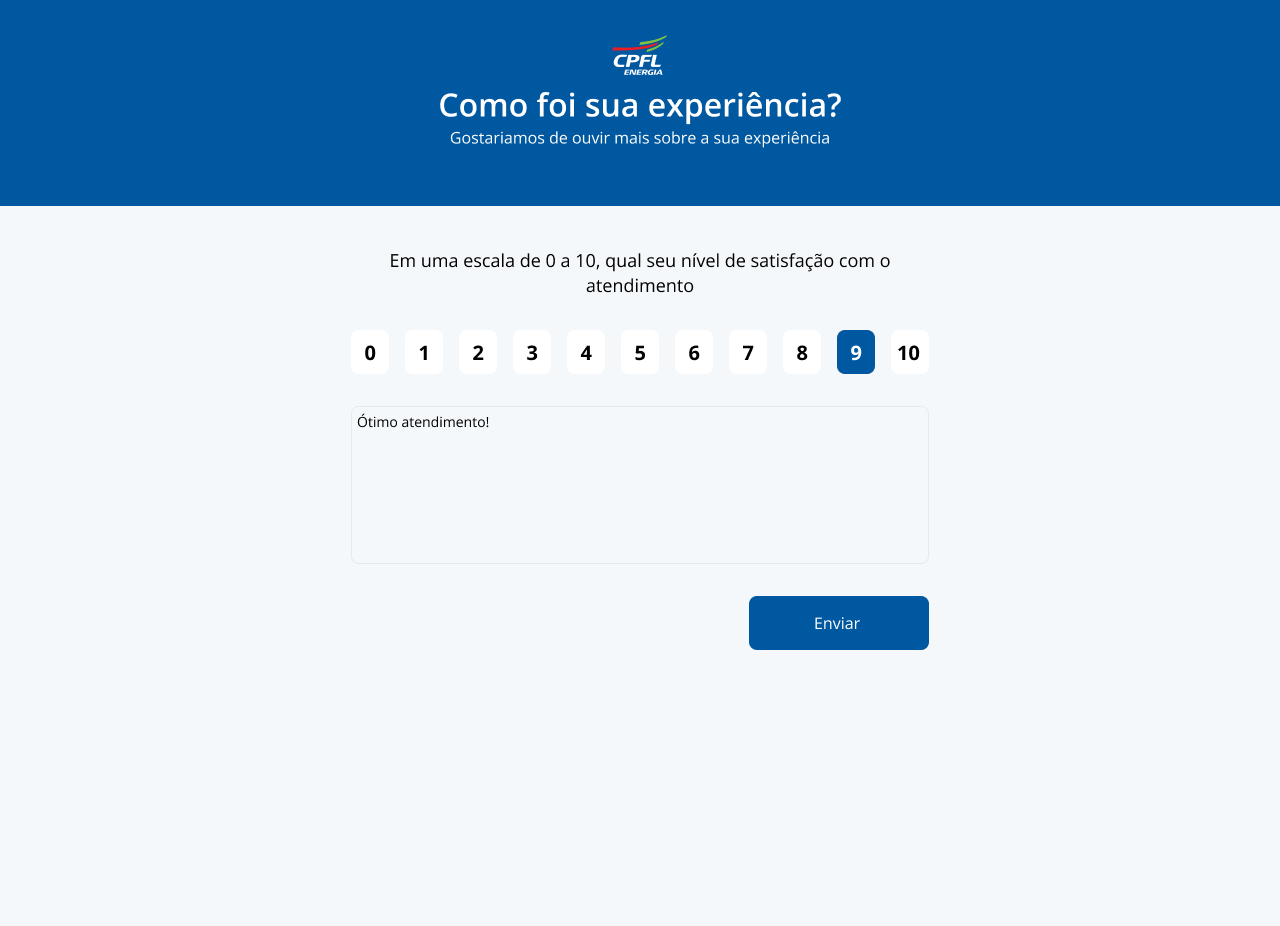
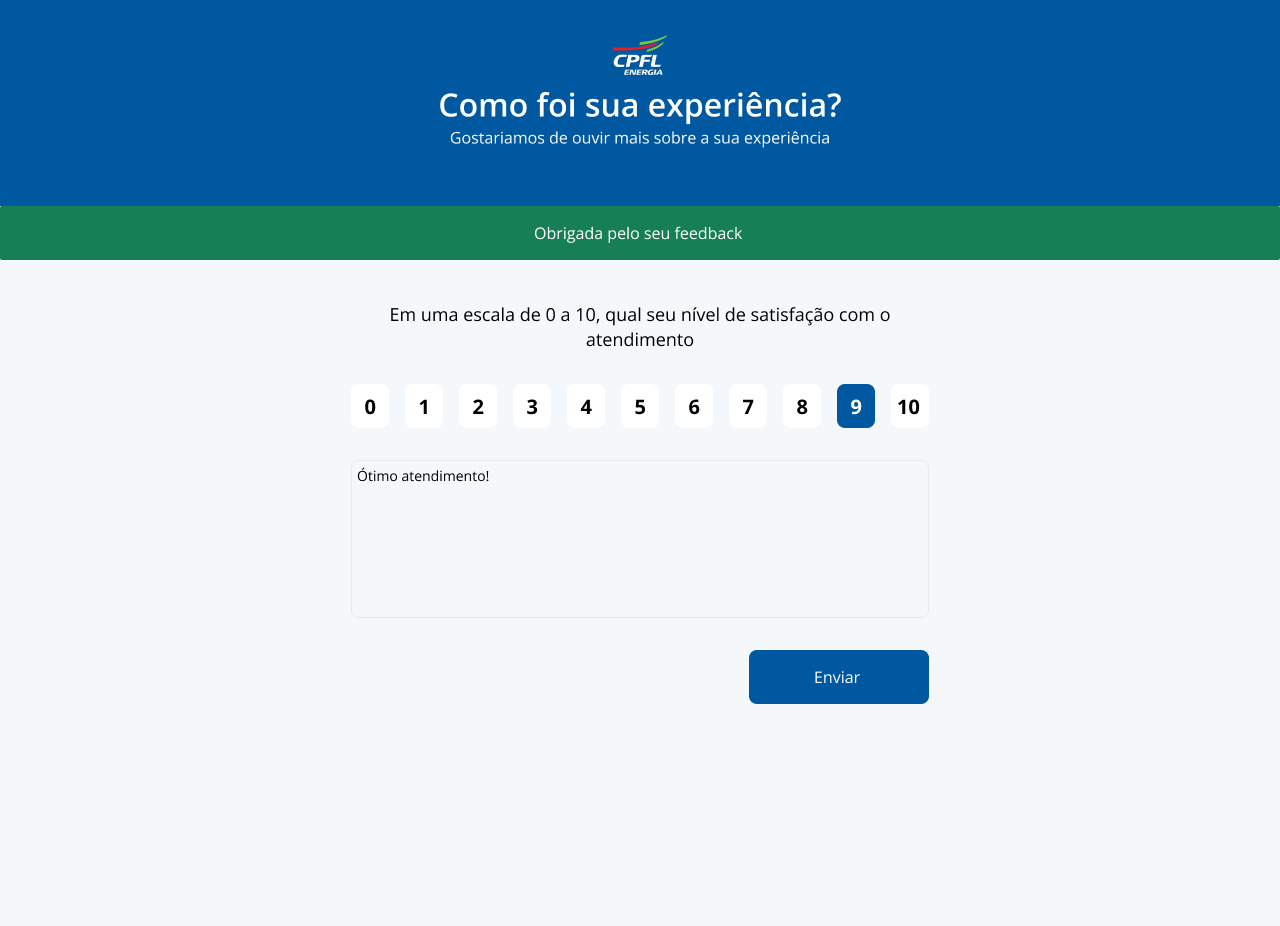
— and the possibility to rate at any moment
Portal CSC — User testing session — pre-launch
Beta — Phase 1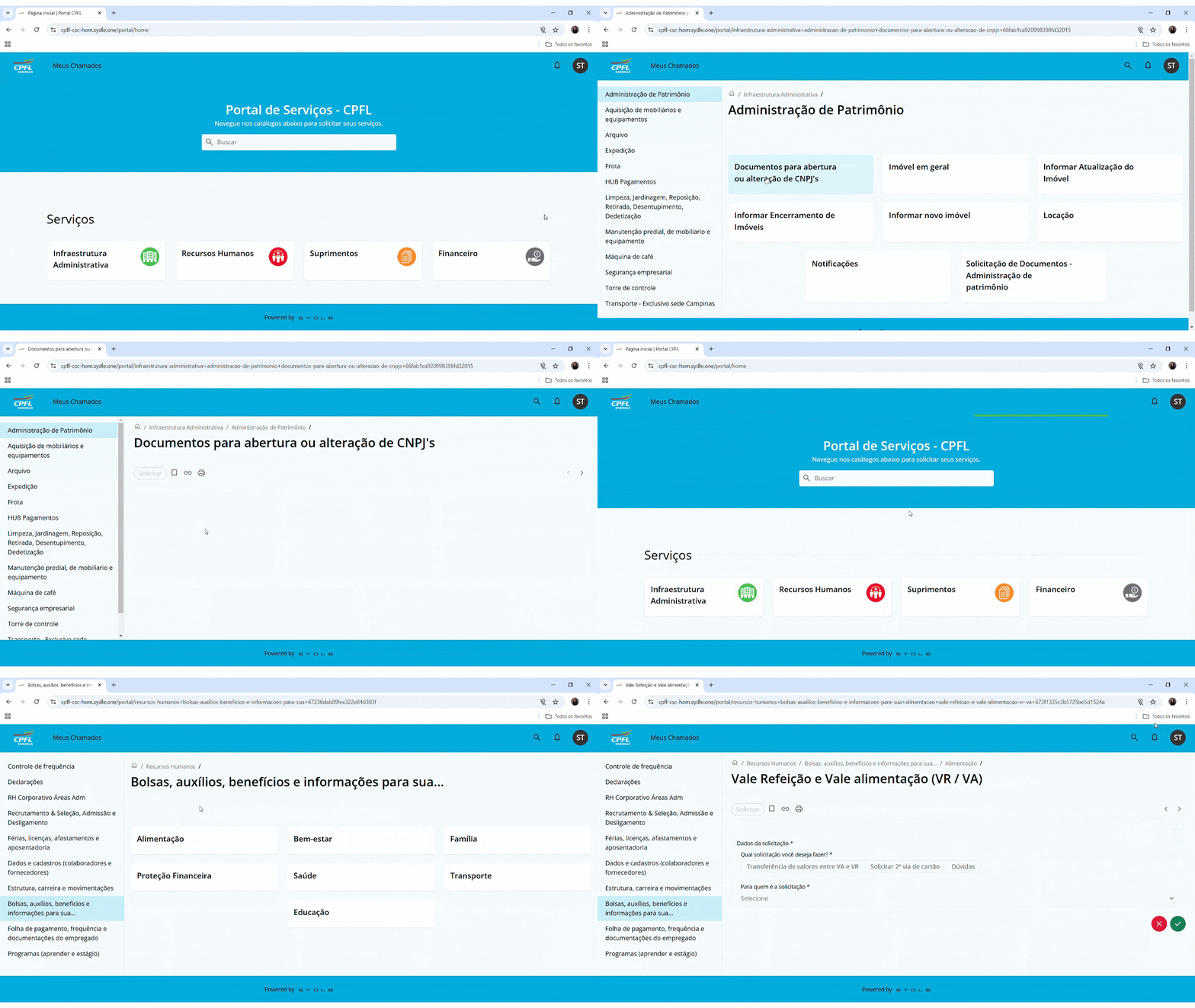
Areas served by Portal CSC
Each business area had its own catalog of services, flows, and approval structures — all unified under the same portal experience.

100% adoption. Five phases.
A company that now runs on data.
The rollout was designed to manage risk and build trust simultaneously. Each phase expanded coverage — 20%, 40%, 80%, 100% — while metrics, user communication, and bug tracking ran in parallel. By Phase 5, every CPFL employee was on the platform. The satisfaction score had climbed from 4.0 to 4.3/5. Monthly active users reached 6,000. And the hallway requests had stopped.
Testing
"Portal stabilised and used by 100% of CPFL. Next steps include continuous evolution with new functionalities and process improvements." — Recorte Board — CPFL Internal Review
Product thinking in a traditional industry is a language problem, not a design problem.
The biggest challenge on CPFL wasn't designing the portal — it was proving, in every meeting and every sprint review, that the process we were following was worth following. In a traditional industry, the reflex is to jump to solutions, hand work to suppliers, and measure success by delivery rather than outcome. Shifting that mindset, even partially, required constant translation between product thinking and the language the organisation already spoke.
Working inside a consultancy engagement (Weme) for a client this size meant operating across three distinct stakeholder layers simultaneously: CPFL's leadership, the business owners per area, and the end users — employees who had been navigating the old system for years and had strong opinions about change.
The phased rollout model turned out to be the most important design decision of the project — not the portal itself. By releasing to 20% first, collecting real data, and using it to improve before expanding, we built an internal narrative that data-driven iteration actually works. Each phase didn't just grow adoption; it grew trust in the methodology.
This project confirmed something I believe strongly: internal products are underrated as transformation levers. When the people inside a company experience what good product design feels like firsthand — through something they use every day — the argument for applying that same thinking externally becomes much easier to make.